Swimming With Sharks In The Exumas: Why A P&L Means Nothing If You Never Get In The Water
Nurse sharks circling my legs in three feet of water off Compass Cay. A drug runner's plane rotting on a sandbar at Norman's Cay. Pigs that swim out to meet the boat. The Exuma Cays are a must-do-once-before-you-die trip — and the whole day was a live demonstration of Rule 33 of The Rogue Code: own your time before you own anything else.
I have spent most of my adult life staring at screens. Level two, order flow, the tape, a phone that never stops. I made my money in a chair. And I will tell you something no trading course will: the chair will happily take every year you are willing to hand it, and it will never once say thank you.
On Thursday I took a boat out through the Exuma Cays instead. Nassau at sunrise, then a run south across water so shallow and so clear that the boat looks like it is flying. By lunch I was standing in three feet of water at Compass Cay with nurse sharks brushing past my shins like fat, lazy dogs. By early afternoon I was floating over a smuggler's airplane that has been sitting on the bottom off Norman's Cay since the eighties, coral growing out of the fuselage, a school of grunts living inside a wing.
Best day I have had in a year. And the entire day was a live demonstration of a rule I wrote down long before I was any good at following it.
The Water Does Not Look Real
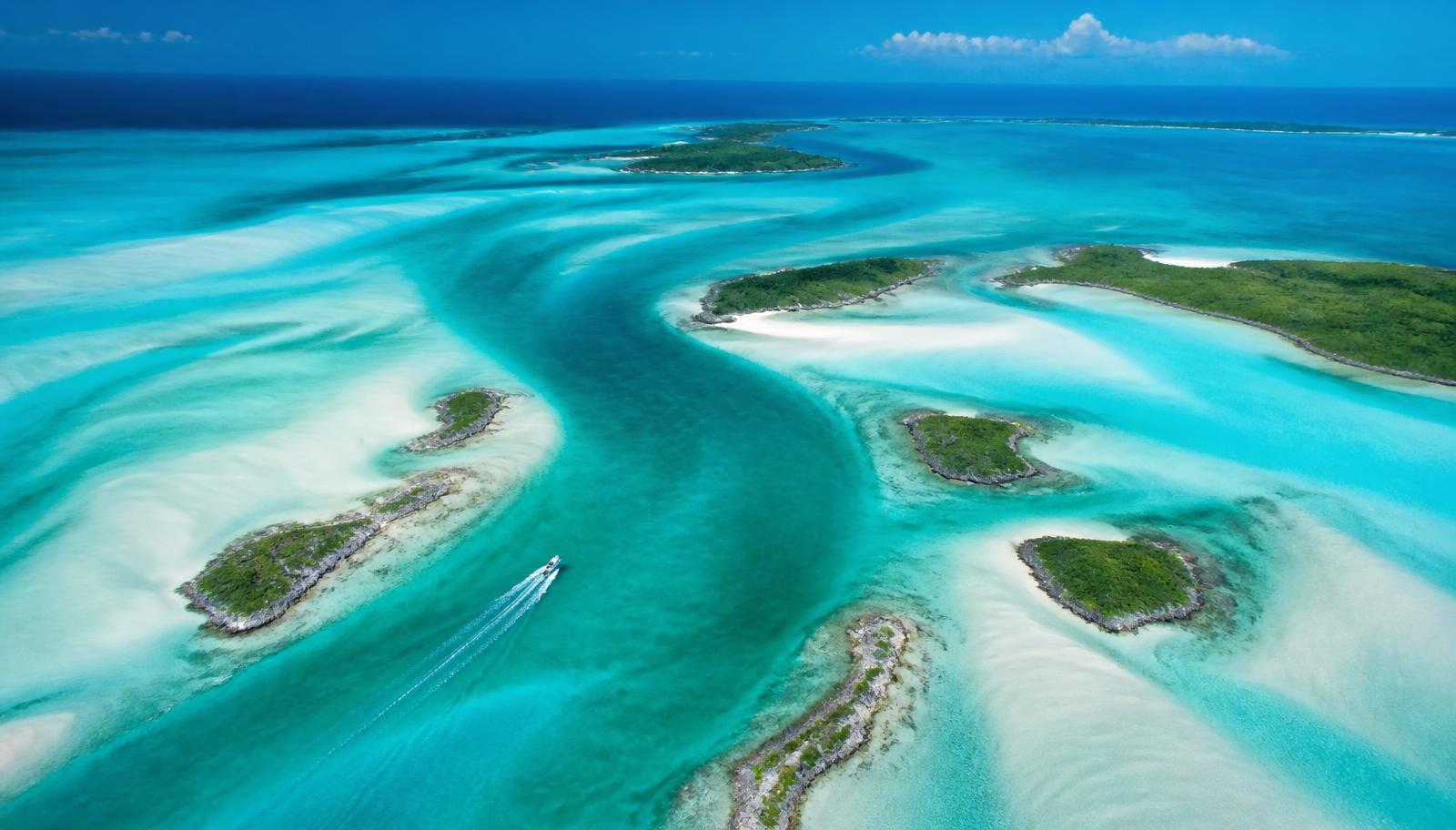
First thing: pictures do not work. Everybody warns you, nobody believes it, and then you get there and the water is a color you do not have a word for — jade over the sand flats, glass over the grass, and then a hard navy line where the bank drops off into the tongue of the ocean. Three hundred and sixty-five cays strung out over a hundred and twenty miles, and most of them have nobody on them at all.
The Exumas run southeast from Nassau. You can fly into Staniel Cay or George Town and base yourself there, or you can do what I did and run out by boat for the day. Either way, the geography is the attraction: sandbars that appear at low tide and vanish at high, cuts between islands where the current rips through like a river, and mile after mile of two-to-six-foot water over white sand that acts like a mirror.
If you only ever take one Caribbean trip in your life, take this one. Not because it is exclusive — it is not, a day boat and a hundred bucks gets you most of it — but because it is the only place I have been where the landscape itself makes you stop talking.
Compass Cay: Sharks You Can Touch
Compass Cay is the one people do not believe until it is happening to them. You tie up at a private marina, walk down the dock, and there are eight or ten nurse sharks lying in the shallows waiting for you because generations of them have grown up around that dock. Then you get in with them.
Nurse sharks are bottom feeders — no rows of teeth coming at you, no menace, just enormous sandpaper-skinned animals that move like they are half asleep. They bump into your legs. They swim over your feet. You are standing in waist-deep water in the middle of a wild ocean with sharks touching you, and your brain spends about ninety seconds screaming before it gives up and starts laughing.
Here is what I actually took away from it: fear is almost always a story about something that has not happened. I have watched grown men who will risk six figures on a two-minute momentum trade refuse to get off a dock. Risk you cannot see on a screen feels bigger than it is. Risk you have measured is just a decision. Same lesson, warmer water.
Norman's Cay: The Plane On The Bottom
A short run north and the mood changes. Off Norman's Cay, in maybe ten or twelve feet of water, sits the wreck of a twin-engine plane — fuselage broken in two, wings coral-crusted, sand rippling underneath it. It has been down there since Norman's Cay was the private airstrip of the Medellín cartel's Bahamian operation, back when Carlos Lehder ran the island and the DEA could not get near it.
You can free-dive it in one breath. That is the strange part. The most notorious piece of narco-trafficking wreckage in the western hemisphere is lying in swimming-pool water, and it has been quietly turned into a reef. Sergeant majors, grunts, the occasional barracuda hanging in the shade of a wing. The ocean took a crime scene and made it into an apartment building.
I am not going to pretend I did not feel something specific floating over it. I have spent years of my life in and around the machinery of federal enforcement, on the record, in courtrooms, on a witness stand. And here is the physical proof of what that world eventually does with everybody in it: it ends up on the bottom, and the fish move in. Nobody's operation lasts. The water does.
The Rest Of The Day: Pigs, A Grotto, And A Sandbar That Disappears
Big Major Cay is the famous stop — the swimming pigs. They hear the engine, they come off the beach and swim out to the boat, and they are much larger and much more confident than the Instagram photos suggest. Feed them from the water, not from your hand while holding your phone. Ask me how the entire boat learned that.
Thunderball Grotto at Staniel Cay is the other must-do. It is an underwater cave system with holes in the roof, so at slack low tide the sunlight comes down in columns through the water and lights the whole chamber up. They shot a Bond film in there. Go at low, slack tide, or the current through the entrance turns a swim into a workout.
And then there is the sandbar. At low tide a strip of pure white sand rises up out of the middle of the ocean, no land in any direction, and you stand on it in ankle-deep water with the tide coming back over your feet. Two hours later there is nothing there. That is the Exumas in one image — the best thing you will see all day exists for a couple of hours and then the ocean takes it back.
How To Actually Do It
Base: Nassau for a day trip by fast boat, Staniel Cay for the middle of the chain, or George Town for the southern end. Staniel is the sweet spot if you want pigs, the grotto, Compass Cay and the plane in one easy day.
Timing: December through April is the flat, dry stretch. Summer is hotter, emptier and cheaper, with afternoon squalls that pass in twenty minutes. Do the grotto at slack low tide, do the sandbars at low tide, and let the captain — not the itinerary — pick the order.
Bring: reef-safe sunscreen, a mask that actually fits, a waterproof camera or a phone case with a lanyard, cash for the marina fees, and half the luggage you think you need. Skip: cheap fins, glass bottles, and any plan that has you looking at your phone.
Cost: it runs from a couple hundred dollars a head on a shared day boat to whatever number you want it to be on a private charter. The water is identical either way. That is the best thing about the place — the view is not priced by tier.
The Rule This Is: Rogue Code Rule 33
So — which rule in The Rogue Code is this? It is Rule 33, the opening rule of Book III, Power & Freedom: OWN YOUR TIME BEFORE YOU OWN ANYTHING ELSE.
The rule, verbatim from the book: 'Time is the only asset with no secondary market. You can borrow money, rebuild reputation, replace a partner, and re-enter a business you exited. You cannot buy back a decade.' And the operating instruction that follows it: 'before you optimize returns, optimize control of your calendar. A business that produces cash but consumes every hour is not an asset. It is a job with worse hours and more liability.'
The Scar behind that rule is not a beach story. For most of my thirties I owned a company that owned me — a brokerage generates problems around the clock, and I answered all of them. The moment I understood it, I was in a hotel room I had flown to for a reason I could no longer remember, taking a call I could have delegated two years earlier. I had payroll, a real net worth on paper, and not one hour of the day that belonged to me. I could buy almost anything I wanted except an uninterrupted afternoon. Then litigation took years of my life and taught the same lesson in a much harder edition: you do not appreciate an unowned calendar until somebody else starts filling yours.
Rule 33 also carries a specific instruction most men skip — protect two blocks a week nobody can book. One for thinking with no agenda, one for the people you claim to be doing all of this for. A block anything can override is not protected. Thursday was that block, cashed in salt water.
Two other rules were running in the background, and I will name them honestly. Rule 39, Health Is the Only Non-Negotiable — you cannot free-dive a wreck at forty-something on a body you have been renting out to a desk. And Rule 40, The Best Revenge Is a Bigger Life — which is the whole answer to everyone who spent the last decade writing about me. A bigger life is not a bigger number. It is a bigger set of days.
That is the point of this whole post. A successful trader with no life is not successful, he is just liquid. The P&L is a scoreboard for a game that only counts if you actually go somewhere and do something with the winnings. Get in the water. The sharks are friendlier than the tape.
Disclosure
This is a personal travel and lifestyle post. It contains no investment advice, no recommendation, and no offer of any security or service. Wildlife interactions carry real risk — use a licensed operator, follow the captain, and never touch or feed marine animals outside a supervised, permitted site.
Frequently Asked Questions
This essay reflects the personal views and opinions of Guy Gentile and is published for informational and educational purposes only. It is not investment advice, a recommendation to buy or sell any security, an offer or solicitation, or a research report. Markets carry risk and any positions, setups, or names discussed may change without notice. Mr. Gentile and parties affiliated with him may hold, add to, reduce, or close positions in the securities discussed at any time. Do your own research and consult a licensed financial professional before making investment decisions. Past performance is not indicative of future results.
Premarket notes, trade setups, and op-eds — free, in your inbox. Read more →