August 31 Tape: A Strike In The Strait, Oil Back Above $90, And The Fed Hike Trade Goes Mainstream
U.S. forces hit Iranian minelayers in the Strait of Hormuz overnight, Brent jumped 2.7% to $90.50 and WTI 3.1% to $85.95, and September rate-hike odds ran past 60% from 41.4% a week ago. The S&P 500 fell 0.33% to 7,686.14, the Dow dropped 374 points to 53,185.90, the Nasdaq slipped 0.12% to 26,370.89 — and all three still closed August green. Here is what the last day of the month actually told you about September.
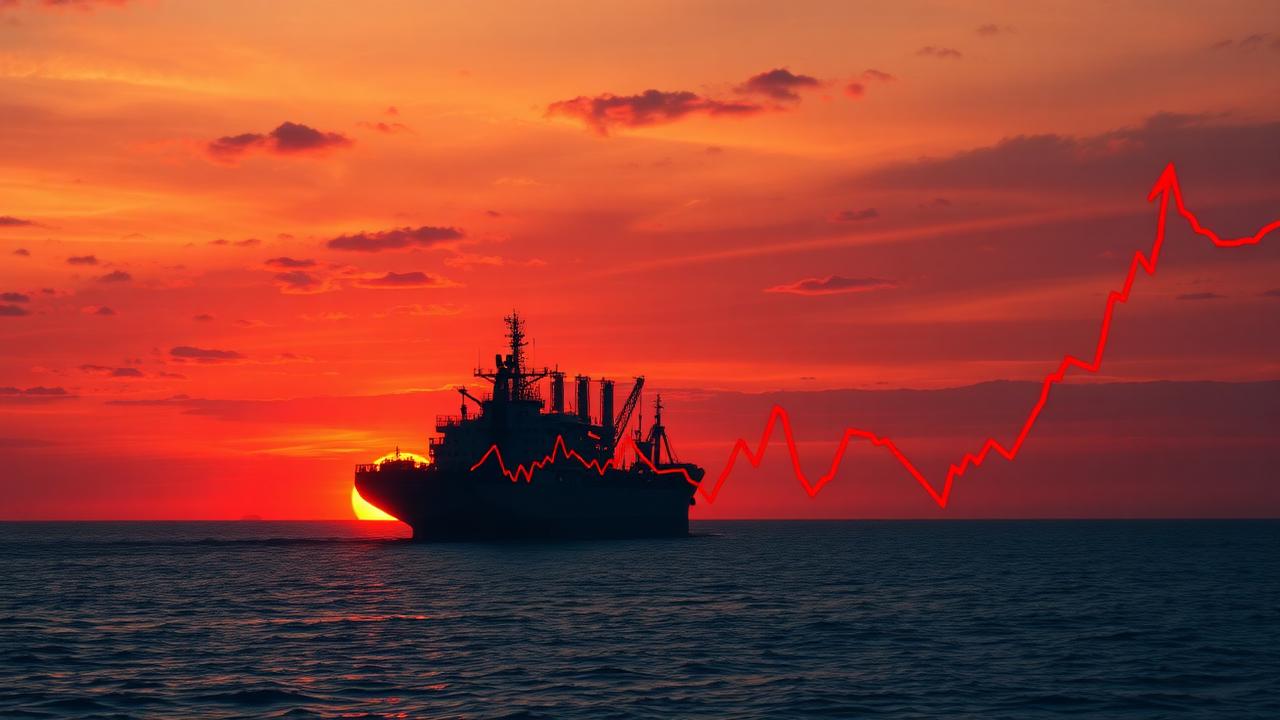
The last day of a month is usually about window dressing. This one was about a shipping lane. Overnight, U.S. Central Command said American forces struck Iranian minelayers that were, in their words, posing an imminent threat in the Strait of Hormuz. Iran hit back at U.S. bases in Jordan. Crude gapped, yields went up, and every equity desk in the country spent Monday marking the same two risks at once: an energy shock and a Fed that just told you it is done cutting.
The tape closed lower but orderly. S&P 500 down 0.33% to 7,686.14. Dow down 374.09 points, or 0.71%, to 53,185.90. Nasdaq down just 0.12% to 26,370.89. Russell 2000 off about 16 points. And despite all of it, August finished green across the board — the Dow up 1.3% for a fifth straight monthly gain, the S&P up roughly 2.6%, the Nasdaq up nearly 4%. That combination — a red day inside a green month, on a geopolitical headline — is the whole story going into September.
Quotes delayed up to 15 minutes via public market data. Auto-refreshes every 60 seconds.
The Scoreboard
S&P 500: 7,686.14, down 25.62 points (-0.33%). Dow: 53,185.90, down 374.09 (-0.71%). Nasdaq Composite: 26,370.89, down 31.53 (-0.12%). Brent crude: +2.7%, back above $90, settling near $90.50. WTI: +3.1% to $85.95. Ten-year Treasury yield: 4.75%, back to where it sat two weeks ago when the administration made the unusual move of announcing it would intervene in the bond market.
Look at the dispersion, because it is the tell. The Dow lost four times what the Nasdaq lost. On a day when the headline is an energy shock and a hawkish Fed, you would expect the high-multiple complex to be the whipping boy. It was not. Industrials, financials and the rate-sensitive blue-chip block took it, while the Nasdaq lost almost nothing because the energy weighting is nil and the AI names have their own gravity.
That is not tech strength. That is nowhere else to hide. When money has already decided that duration is the risk, it does not leave the market — it huddles into the names it believes have earnings power regardless of the funds rate. That is exactly what happened Monday, and it is a crowding problem for September, not a bullish signal.
Hormuz: What Actually Moved The Oil Price
Be precise about the mechanism. The market did not buy crude because of a strike. It bought crude because the strike was against minelayers, and mines are the one cheap weapon that can close a strait. A missile exchange is a headline. Mines in the Hormuz shipping channel are a physical supply event — insurance rates, rerouting, war-risk premiums, delayed cargoes. Roughly a fifth of the world's seaborne oil moves through that lane. That is why Brent went to $90.50 and not $86.
Now the part every trader has to hold at the same time: physical flow determines the oil price, not the military headline. If tankers keep transiting, this premium bleeds out over days, and every energy long that got filled Monday morning gets a lesson in geopolitical mean reversion. If a single hull gets hit or insurers pull cover, $90 is the floor, not the ceiling. Nobody on my side of the screen knows which one happens. What you can know is that the distribution just got a lot wider on both tails.
Treasury Secretary Scott Bessent said Monday morning at the G20 finance meeting in Asheville that the U.S. will continue exerting pressure and that the regime has to come to its senses. That is not a de-escalation signal. Escalation with no stated endpoint is the exact regime in which oil carries a persistent premium instead of a one-day spike.
The Fed Trade Just Went Mainstream
A week ago, CME FedWatch had a September hike at 41.4%. Monday it was north of 60%. That move happened in three sessions, driven by one speech and one energy shock. Kevin Warsh used his first Jackson Hole keynote Friday to say inflation is running too high and that policymakers may need to raise borrowing costs if it does not come down to target. Then crude jumped 3% on Monday and did his argument for him.
BofA's note put the trap plainly: absent a material downside surprise, the onus is now on Warsh to deliver a September hike, or he risks undermining the credibility he just earned. Read that again, because it is the most important sentence of the day. A new chair who talks hawkish and then does nothing is a chair the bond market stops believing. Which means the reaction function has tightened — the bar for the Fed to hold is now higher than the bar to hike.
The 10-year at 4.75% is the receipt. That is not a growth-scare yield or a flight-to-quality yield. That is the market repricing the price of money upward while equities are within a percent of highs. Those two things can coexist for a while. They do not coexist forever.
And notice what did not work Monday: gold fell. In a session with U.S. military action in the Middle East, the classic geopolitical hedge went down, because real yields went up and the dollar firmed. When your hedge stops hedging, the market is telling you the dominant variable is rates, not war.
What Else Mattered
Bitcoin stayed below $80,000. Crypto has been trading like the highest-beta expression of liquidity all year, and it did not catch a bid on a geopolitical headline. That is consistent with everything else: this is a rates tape, and rates going up is not a crypto story.
Energy was the only place with a clean tailwind, and refiners specifically — crude strength feeding product cracks is a more direct earnings path than betting on exploration. That trade is entirely conditional on the premium sticking. I would not confuse a war-risk premium with a demand cycle.
Small caps underperformed again, with the Russell down about 16 points. Higher-for-longer hits the balance sheets that actually float. Every basis point on the front end is a real cost line for the small-cap complex, and the Russell has been the honest indicator all month while the index prints hid it.
September: The Catalyst Stack
The seasonal record is the worst of any month, and I do not trade seasonality on its own. But seasonality plus a stacked catalyst calendar is a different animal, and this September has one. Friday, September 4 brings the August jobs report — the first real data test of Warsh's hawkish turn. Labor Day closes the market Monday, September 7. Then the September FOMC, where a market pricing better than a coin flip on a hike either gets confirmed or gets a credibility problem.
Between now and Friday, the tape belongs to the oil price. If crude holds above $90, the inflation argument writes itself, hike odds keep climbing, and the Dow-style names that got hit Monday keep getting hit. If tankers keep moving and Brent slides back into the mid-80s, half of Monday's repricing unwinds and the September panic gets postponed a few weeks.
How I am framing my own book — commentary, not advice, not a recommendation. One: I treat Monday as a widening of the distribution, not a directional signal, which means smaller size and wider stops rather than a new thesis. Two: the jobs report is a binary, so the exposure I carry into Thursday night is the decision that matters, not the opinion I have about the number. Three: I do not want to be long the crowded index leadership and short duration at the same time — that is one trade wearing two hats. Four: an oil premium that depends on insurance underwriters is the least durable input in this market, and I am not building a September thesis on top of it.
The Bottom Line
August closed green for the fifth straight month on the Dow and snapped a two-month losing run on the S&P and Nasdaq. That is the record. The way it closed — a strike in a shipping lane, crude above $90, the 10-year at 4.75%, hike odds above 60%, gold down anyway — is the forecast.
This market spent the summer being paid to own earnings power and ignore the Fed. Monday was the first session where the Fed and the oil price were pulling the same direction at the same time. That does not make it a top. It makes it the first day the two forces stopped canceling each other out, and September is where we find out how much of the rally was priced for a world where they never would.
Disclosure
This is market commentary and personal opinion, not investment advice, and not a recommendation to buy or sell any security, commodity or digital asset. Prices are as of the August 31, 2026 U.S. close and move constantly. I may hold positions in names discussed and may change them without notice. Trading involves substantial risk, including the risk of total loss.
Frequently Asked Questions
This essay reflects the personal views and opinions of Guy Gentile and is published for informational and educational purposes only. It is not investment advice, a recommendation to buy or sell any security, an offer or solicitation, or a research report. Markets carry risk and any positions, setups, or names discussed may change without notice. Mr. Gentile and parties affiliated with him may hold, add to, reduce, or close positions in the securities discussed at any time. Do your own research and consult a licensed financial professional before making investment decisions. Past performance is not indicative of future results.
Premarket notes, trade setups, and op-eds — free, in your inbox. Read more →