How the SEC Rigged the SureTrader Trial: A 10-Day Show Trial Built on a Withdrawn Rule, Three Bad Witnesses, and a Jury Charge That Took the Verdict Away From the Jury
Inside SEC v. MintBroker/Gentile, the 2024 federal jury trial in the Southern District of Florida: a 1989-withdrawn interpretive statement converted into a jury instruction, a self-disclaimed 2013 staff FAQ used as the controlling definition, an SEC opening that invoked the FINRA Pattern Day Trader rule sixty-one times as if it were federal law, three witnesses with serious credibility problems, and a court that denied summary judgment in May and then directed the verdict on the elements six weeks later. Named, quoted, and sourced to the public record.
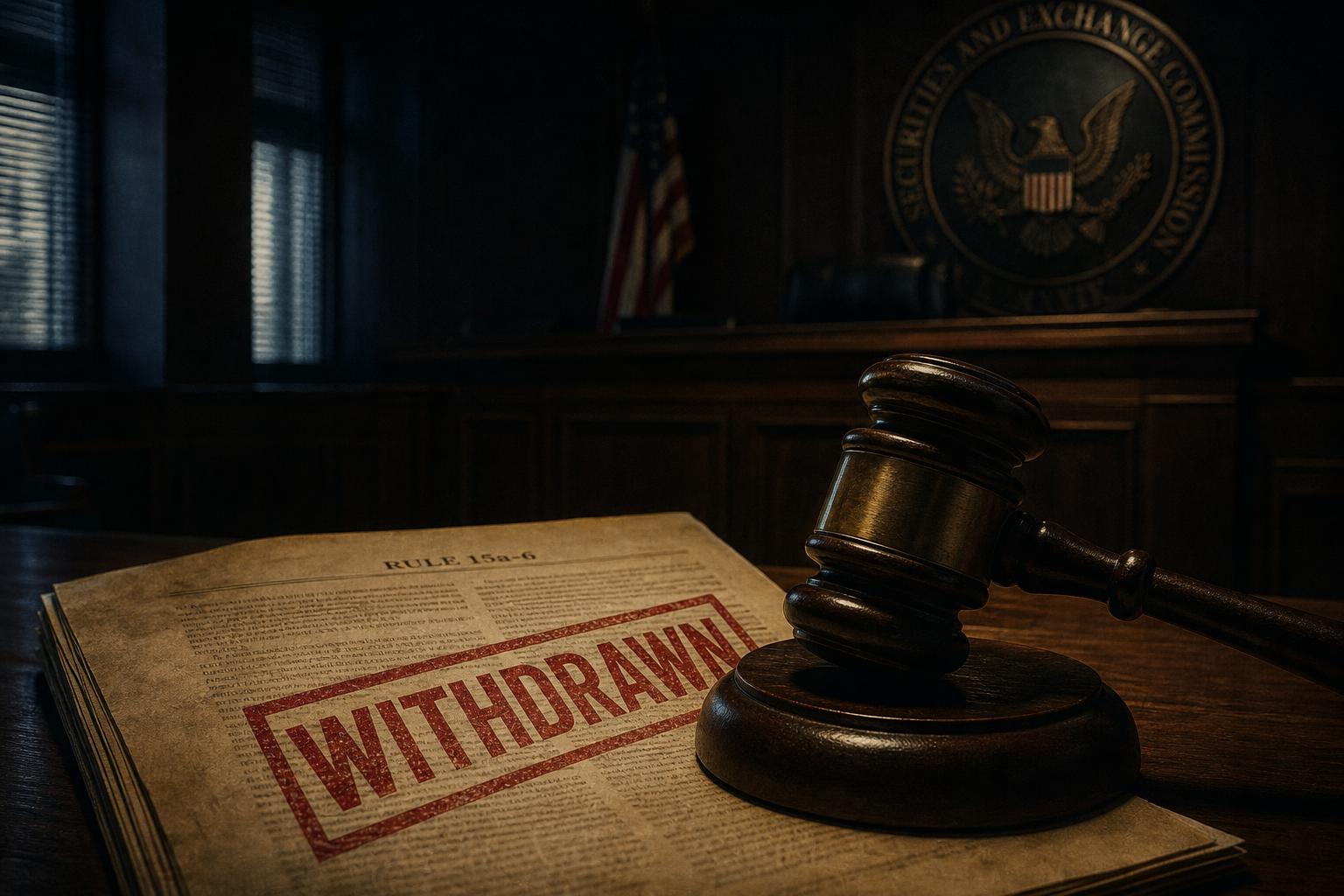
On the afternoon of June 27, 2024, after nine trial days, the judge told the lawyers in the Southern District of Florida that she was going to instruct the jury that the defendants — me and my company MintBroker International, doing business as SureTrader — had 'defaulted on each of the elements' of Count 1.
That sentence is in the rough transcript of Day 9 PM. I have read it more times than I would like to admit. It is the moment the SEC's trial against me stopped being a trial.
What follows is my account of how that happened, who did it, and why I believe the record they built will not survive an appeal. Every quote is from a transcript page or a court filing. Every name is the name on that piece of paper.
What This Article Is And Is Not
This is an opinion column. It is also a reported one. I went through every day of the trial transcript, the Day 9 PM rough draft on the jury-charge fight, the deposition transcripts the SEC took before trial, and the May 21, 2024 Omnibus Order at Docket 264 in which the court denied the SEC's summary judgment on all counts.
I do not call the SEC lawyers liars in the legal sense. I quote them. I do not call the witnesses perjurers in the legal sense. I quote them too, and I put their trial testimony next to what they said before. I do not attack the judge personally. I describe what her rulings did and what the docket says about them. Everything in this piece is sourced to the public record of SEC v. MintBroker International, Ltd. and Guy Gentile, S.D. Fla. Case No. 21-cv-21079.
If a reader thinks any single fact below is wrong, the cure is to read the same documents and tell me where I have misread them. I will correct what I get wrong. I will not stop telling the truth about what is in those pages.
Who Was In That Courtroom
The SEC sent two trial lawyers from its Miami Regional Office. Alice Sum was lead trial counsel. Alise Johnson was co-counsel. Victoria Jacqmein was their paralegal. The case was tried before United States District Judge Beth Bloom, with Magistrate Judge Edwin G. Torres handling earlier pretrial matters.
I was represented by Matthew Ford of Ford O'Brien Landy LLP in New York, with Emily Bloom on his team and Rene Becerra as paralegal. Ford has tried more white-collar cases than most lawyers will see in a career. He preserved every objection I am going to describe in this piece on the record, in plain English, where any appellate panel can read it.
I am naming the SEC lawyers because they are public officials litigating a public case in a public courtroom in the public's name. They argued for a jury charge that I believe converted a withdrawn agency interpretation into federal law. The public is entitled to know which lawyers made that argument.
The Headline Finding — The Jury Never Actually Decided Liability On Count 1
Count 1 in the case was a civil claim under Section 15(a)(1) of the Exchange Act — operating as an unregistered broker-dealer with respect to US persons. The whole case turned on whether SureTrader 'solicited' US customers in a way that took it outside the Rule 15a-6 foreign broker-dealer exemption.
On Day 9 PM, after a full day of fighting over the jury instructions, the court — in the rough transcript — said this:
'…with regard to the Court's instructions to the jury, as you originally requested, I am going to advise the jury that they have defaulted on each of the elements, and they'll answer specifically as to the affirmative defense that Mr. Gentile is asserting with regard to SureTrader and they'll answer that as to Count 1.'
Read that again. The court was not going to give the jury the elements of the offense and ask them to decide whether the SEC had proved each one. The court was going to tell the jury that those elements had been defaulted — meaning, decided against the defendants as a matter of law — and that the jury's only real job on Count 1 was to evaluate the affirmative defense.
Matthew Ford put the objection on the record immediately. From the same rough transcript:
'Your Honor, quickly, just for preservation purposes, I continue to object, as well as to raise what I view as a due process violation objection, and the fact that we are taking withdrawn guidance and converting it into a jury instruction. We would have no way of knowing all these years ago that a withdrawn [interpretive] statement could have formed the foundation in federal court for a jury charge on a statute passed by Congress in relation to an exemption created under [Rule 15a-6].'
That is the entire case in one paragraph. A federal jury was told that the elements of a civil securities claim were 'defaulted,' and the legal scaffolding under that ruling was, in our view, a withdrawn 1989 interpretation kept alive only by a self-disclaimed 2013 staff FAQ.
The Contradiction — Summary Judgment Denied On May 21, Verdict Directed On June 27
Six weeks before that jury instruction was given, the same judge issued an Omnibus Order at Docket 264. The order is forty-five pages. The opening line is unambiguous:
'For the reasons set forth below, Plaintiff's Motion for Summary Judgment is denied on all counts.'
The court walked through Rule 15a-6, walked through the 1989 release, walked through the 1998 Internet Release, and concluded — repeatedly — that there were genuine issues of material fact for a jury. On the website disclaimer: 'a reasonable juror could conclude that SureTrader did not improperly solicit U.S persons as it complied with Rule 15a-6 by posting a [pop-up] that it was not intended for U.S. persons.' On the exemption itself: 'a genuine issue of material fact exists as to SureTrader's solicitation of U.S. persons.' On the broker-dealer registration question: a reasonable juror, the court said, 'could conclude that' the Rule 15a-6(a)(1) exemption might apply.
Six weeks later, those same questions — the ones the court told the SEC a reasonable juror could decide either way — were taken from the jury. The Day 9 PM transcript is the docket's own evidence that the court reversed itself on the central liability question of the case in the most consequential possible way, in front of a sworn jury, after the SEC had already presented its evidence.
I am not the first defendant in a federal courtroom to be told that summary judgment is denied because the case is for the jury, and then to watch the jury be told the case has already been decided. I will probably not be the last. But if you ask me when this trial stopped being a trial and started being a sentencing, that is the moment.
The PDT Lie — Mentioned Sixty-One Times, And It Is Not Even A Law
I counted the references in the transcript. The phrase 'pattern day trader,' the abbreviation 'PDT,' and the SEC's frequent malapropism 'PTD' appear at least sixty-one times across the trial transcripts I have in front of me. The SEC's opening statement led with it. Their direct examinations of their fact witnesses came back to it repeatedly. The theme was always the same: that SureTrader existed so Americans could 'evade' the US Pattern Day Trader rule.
From the SEC's opening, as captured in the Day 2 transcript: 'Are there any rules for day trading? US day traders are subject to rules in the US called US pattern day trade rules… One of the rules is that pattern day traders must maintain a minimum of 25,000 in their account on any day that they trade.'
I want to be careful here, because this is the part where the SEC most overplayed its hand in front of the jury. The Pattern Day Trader rule is not a US law. It is not an SEC rule. It is FINRA Rule 4210(f)(8)(B) — a FINRA membership by-law. FINRA is a self-regulatory organization, a private trade association. Its rules apply to its members. SureTrader was a Bahamian broker-dealer that was not, and was not required to be, a FINRA member. The PDT rule has no extraterritorial reach because there is nothing extraterritorial about it; it is the by-law of a private American membership organization that does not apply to brokers in the Bahamas, Germany, the Cayman Islands, or anywhere else.
On cross-examination at trial, I made that point in plain English. From the Day 2 transcript of my own testimony: 'There's no law in the United States of America against pattern day trading. If you want to buy a stock on the Chicago stock exchange, you don't need 25,000, because FINRA is not a country club governing that… It's a by-law for FINRA. And again, not every broker-dealer has to be a member.'
What did the SEC do about the Pattern Day Trader rule after spending ten days telling a federal jury that helping Americans avoid it was a federal securities violation? Nothing. The rule is still a FINRA by-law. It still does not apply to non-FINRA foreign brokers. It still does not apply to any individual trader anywhere in the world. The SEC, which by its own theory believes the rule's avoidance is so dangerous it warrants a federal jury trial against a foreign broker, has never lifted a finger to make the PDT rule a US securities law.
I owe my readers an honest acknowledgment. The SEC introduced into evidence a SureTrader marketing post that said 'Avoid the Nasty PDT [Pattern Day Trader] Rule' and asked customers if they were 'up for circumventing the rules and getting what you want.' That post is real. It is in the Omnibus Order at Docket 264. I have never pretended it was not. My position then and now is that marketing language about a private trade-association by-law is not securities fraud, and the SEC's own summary judgment denial is the strongest evidence that a reasonable person could read those words and not conclude that SureTrader was unlawfully soliciting US persons under Rule 15a-6.
The Withdrawn Rule — Rule 15a-6, The 1989 Vanishing Act, And The FAQ That Disclaims Itself
This is the part that will matter on appeal, so I will go slowly.
Rule 15a-6 is a real SEC rule, adopted in 1989, that gives foreign brokers a conditional exemption from US broker-dealer registration. Its plain text bars 'solicitation' of US persons, but the rule itself does not define solicitation. The SEC's case theory at trial was that 'solicitation' includes a long, expansive list of conduct — websites, advertising, attendance at trade shows, the works — and that SureTrader fell on the wrong side of that list.
Where does that expansive definition come from? Not the rule. Not a Commission release that went through notice-and-comment. It comes from an interpretive statement that was proposed in 1988 and that — in the SEC's own 1989 final adopting release for Rule 15a-6 — was expressly withdrawn. The Commission, in its own words in the 1989 release, declined to adopt the proposed interpretive statement and said that the question of solicitation was 'best addressed by the staff on a case-by-case basis.' From 1989 until 2013, that expansive definition had no formal home in SEC guidance.
In 2013, an SEC staff member at the Division of Trading and Markets posted a Frequently Asked Questions page on Rule 15a-6 that resurrected the withdrawn 1988 language. That FAQ — still on the SEC website, you can read it today — begins with this disclaimer on its face: 'The following answers to frequently asked questions were prepared by and represent the views of the staff of the SEC's Division of Trading and Markets. They are not rules, regulations, or statements of the Securities and Exchange Commission. The Commission has neither approved nor disapproved this information.'
On Day 9 PM, Ford put it to the court bluntly. From the rough transcript: 'It's never been defined. And in 2013, what the SEC has tried to do is they tried to introduce an FAQ, a FAQ that was put out by a certain staff member. But we went over it. At the top of it, it says that this is not a rule, regulation, or guidance, and the SEC does not take a position one way or the other on it.'
Alice Sum's response on the record was that the disclaimed FAQ language was 'the active definition' of solicitation. From the same rough transcript: 'We absolutely disagree with Mr. Ford that this solicitation definition cannot be used. It is the active definition. It is contained in the release. And if there's any reason that this Court is considering not going forward in such a manner, the SEC requests leave to address this…'
Set aside who is right on the merits of administrative law. Just stare at the structure. The SEC sued me for violating a federal statute. The elements of that statute were filled in by a definition that the Commission itself declined to adopt in 1989. That definition only re-emerged in a staff document that, in plain English on its first line, tells you it is not a rule, not a regulation, and not the Commission's view. And a federal jury charge was built on it.
Even if you disagree with everything else in this article, that structure is not how due process is supposed to work in a federal civil enforcement action. A regulated party is entitled to fair notice of what conduct is prohibited. That fair-notice principle is in cases as old and as plain-vanilla as FCC v. Fox Television Stations. The SEC's position in this trial was that fair notice can come from a staff FAQ that disclaims itself. I do not believe an appellate court is going to bless that.
The Witnesses — What They Said, And What The Record Shows
The SEC put on four fact witnesses I want to address. I am going to give each one their name, identify them honestly, and then quote them against themselves where the transcript supports it. I am doing it this way because the jury did not get a clean opportunity to weigh credibility on Count 1 once the elements were defaulted, and because every American who hears about an SEC enforcement trial deserves to know what those witnesses actually said.
Yaniv Frantz — The Terminated Employee
Yaniv Frantz was the SEC's lead 'insider.' He was an ex-employee at SureTrader. He testified across Days 3, 4, and 5. The SEC presented him as someone who had been on the inside of the alleged solicitation scheme.
On cross-examination, Ford read into the record the email by which Frantz had been terminated, which began: 'Yaniv, your termination is due to many reasons…' The trial transcript contains the full text. It is not flattering to the witness. A terminated employee testifying against the company that fired him is, in every federal courtroom in America, the textbook scenario for credibility cross-examination. He was that witness here.
Read his testimony in the Day 3 transcript and you will find a pattern that is hard to miss. Time after time, on questions that any honest witness could answer in a sentence, he asks counsel to repeat the question. From the transcript: 'I'm sorry, can you repeat the question.' 'Sorry, are you repeat the question.' 'Can you please ask the question again.' 'Can you please repeat the question.' 'No. Can you please rent that.' [sic] 'Can you please ask the question again.' Eight separate instances across his cross. That is not a witness who misheard counsel. That is a witness stalling for time while trying to figure out what the safe answer is.
I am not telling a federal court that Yaniv Frantz committed perjury. I am telling you, as a reader of the transcript, that this witness's body of trial testimony is exactly what an experienced trial lawyer would expect from a disgruntled, terminated ex-employee who has been prepared by the government and is afraid of getting caught in his own previous statements.
Philip Dorsett — The Cooperator With A Shifting Story
Philip Dorsett also was a former SureTrader employee. He testified on Day 2 and was recalled on Day 5. The SEC deposed him in February 2023; the transcript of that deposition is in my hands as I write this.
On Day 5 of trial, Dorsett was asked about my role at the company after my 2016 resignation. From the transcript: 'Guy actually resigned… he wasn't as visible. But…' That 'but' is doing a lot of work. The story he gave the jury on recall was incrementally different from the story he had given on direct two days earlier, and from the story he gave under oath in his February 2023 deposition. I am not going to publish the deposition impeachment in this article; that is for a follow-up piece. I am going to say that the transcript of Dorsett's trial testimony, on its own, shows a witness who shifted depending on which lawyer was asking the question.
Mazen Hasan Agha — The 'US Victim' Who Came In Through A Third Party
Mazen Hasan Agha was the SEC's headline US customer witness on Day 6. The whole point of putting him on the stand was to show the jury a flesh-and-blood American who, the SEC argued, had been improperly solicited by SureTrader.
On cross, Agha admitted two things that gut the SEC's solicitation theory. First, he confirmed the pop-up disclaimer was on the SureTrader site when he opened an account — the same disclaimer the Omnibus Order said a reasonable juror could find was sufficient under Rule 15a-6. Second, and more damaging to the government's case, he said in plain words how he had learned about SureTrader in the first place. From the Day 6 transcript: 'Ross Cameron told us about [SureTrader].'
Ross Cameron is the founder of Warrior Trading, an independent third-party trading education business. He is not SureTrader. He was never employed by SureTrader. He ran his own company, made his own marketing decisions, and chose his own affiliate relationships. If a US customer came to a foreign broker because a third-party US educator recommended it, that is exactly the kind of unsolicited customer relationship that Rule 15a-6(a)(1) and the SEC's own 1998 Internet Release contemplate as permissible. The SEC's own 'US victim' explained on the stand that he was not solicited by us. He was educated by someone else and made his own choice.
Ross Cameron — The Affiliate The SEC Tried To Make Us Responsible For
Ross Cameron testified on Day 7 morning. The SEC's theory required them to treat Warrior Trading's marketing as if it were SureTrader's marketing. The cross-examination on this point was patient. Cameron was an independent business. He earned his money selling courses and chat-room access to US retail traders. He referred some of those traders to brokers, including SureTrader. He referred them to other brokers too.
Treating a US educator's choices as the foreign broker's solicitation, when the educator is running an arm's-length business, is the kind of indirect-attribution theory that the SEC's own 1998 Internet Release does not actually support. The court let the SEC argue it anyway. The jury never got to weigh whether the SEC's evidence on Count 1 actually closed that gap, because the elements were defaulted.
The Other Unfairness In That Courtroom
Beyond the headline issues, the trial record is full of smaller problems. I will list them briefly:
The audio/visual system in the courtroom failed at the start of Day 2, the SEC's opening day. The transcript notes a five-minute recess called specifically so that 'Elias Campos' could reset the system. The SEC's opening proceeded under ongoing tech problems.
A juror — Juror Number 8 — was the subject of an issue raised before openings even began. The transcript flags it; I am not in a position to claim what the merits of that issue were, but the record shows the trial started with a juror question on the table.
On Day 7 morning, the SEC sought to introduce SureTrader employee emails that referenced my 2016 DOJ indictment. That indictment was dismissed. The Department of Justice walked away from it. The SEC nevertheless tried to use employee emails about it to color the witness's testimony. Ford fought it on the record. The fact that the SEC felt it needed to use a dismissed indictment to support its civil case tells you a great deal about the strength of the underlying evidence.
On Day 9, the court itself characterized the parties' competing jury instructions as 'incomplete.' From the rough transcript: 'The jury instructions are incomplete. You have competing instructions. And it's three minutes to four.' Three minutes to four o'clock on the eve of charging the jury, with the court itself acknowledging the instructions were not in workable form, is not how a federal civil jury trial on a fair-notice issue is supposed to look.
How I Really Won That Trial
I lost on a jury form. I won on the record. The record is what an appeals court reads.
Here is what I won on the record:
One. The Pattern Day Trader theory died in open court. The SEC told the jury sixty-one times that I had helped Americans evade a federal rule. There is no federal rule. PDT is a FINRA membership by-law, and the SEC has done nothing in the two years since this trial ended to make it anything more.
Two. The solicitation definition the SEC sued me under was withdrawn in 1989 and only survives in a self-disclaimed staff FAQ. Alice Sum admitted, on the record, that the live definition the SEC was asking the court to use in its jury instructions came from that FAQ. The Commission itself, in 1989, declined to adopt that very language. Federal due process does not allow a regulated party to be sanctioned for violating a definition the Commission itself withdrew.
Three. The same judge who, on May 21, 2024, denied the SEC's summary judgment on all counts because reasonable jurors could decide both the solicitation question and the Rule 15a-6 exemption either way, on June 27, 2024, took those exact questions away from the jury by telling them the elements were defaulted. That is a contradiction on the face of the same docket, signed by the same hand.
Four. The SEC's three fact witnesses, taken together, made the SEC's case worse, not better. A fired employee who stalled on cross. A cooperator whose story shifted between direct and recall. A US 'victim' who admitted he found SureTrader because an independent US educator recommended it, after seeing the disclaimer that the court itself had said a reasonable juror could find sufficient.
Five. Matthew Ford preserved every one of these issues for appeal on the record, in plain English, in real time. Read the Day 9 PM transcript. The due-process objection is not buried in a footnote of a post-trial brief. It is in the witness room, on the rough transcript, in front of the court reporter, in front of the parties, with the citation to the withdrawn 1989 interpretation laid out so that no panel of judges can pretend it was not raised.
I have been in and around the securities industry for more than two decades. I have been sued by the SEC. I have been indicted by the DOJ on a matter that was later dismissed. I have been defamed by short-sellers in the press. I have lost cases and I have won cases. This is the first time I have been through a federal jury trial in which the judge denied summary judgment because the case was for the jury and then took the case from the jury at the charge conference. That is not a normal trial. That is a show trial.
What This Means For Every US Broker, Every Foreign Broker, And Every American Trader
If the SEC can build a federal jury charge on a 1989-withdrawn interpretation and a 2013 staff FAQ that disclaims itself on its first line, no broker — US or foreign — has fair notice of what 'solicitation' under Rule 15a-6 actually is. Every foreign broker that has ever posted a disclaimer pop-up, every US broker that has ever sent a referral to an offshore platform, every educator who has ever taken an affiliate fee from a brokerage, lives now under the same uncertainty I have been living under.
If the SEC can spend ten days telling a federal jury that a FINRA membership by-law is a US securities law, and never make any effort in the two years since to actually make it one, then the agency is comfortable using statutory language in front of a jury for any private trade-association rule it happens to like. That is not what Congress wrote when it gave the SEC its enforcement authority.
If a court can deny summary judgment on the central liability question of a case because a reasonable juror could find either way, and then, six weeks later, instruct that same jury that the elements have been defaulted, then the line between summary judgment and the jury verdict has stopped meaning anything in the federal system. That is not a problem that is unique to me. It is a problem for every civil defendant who depends on a jury actually deciding the elements that the court has said are genuinely in dispute.
Where This Goes Next
The trial verdict is on appeal. The appellate briefing will tell the story the jury was not allowed to hear, with the citations to the docket and the transcript that I have used in this article. I expect the appellate panel will be very interested in the contradiction between the May 21, 2024 Omnibus Order and the June 27, 2024 jury instruction. I expect the panel will be even more interested in the fact that the SEC's solicitation theory at trial rested on guidance that the Commission itself withdrew in 1989.
I will write about the appeal as it moves. I will write a follow-up piece on the deposition impeachment that did not fit in this article, and a separate piece on the SEC's effort to use my dismissed 2016 DOJ indictment as trial evidence in 2024.
I am also writing this piece for one other reason. There are people on the staff side of the SEC's enforcement program who, in my opinion, brought this case to trial knowing what the law actually says about Rule 15a-6 and what the FINRA Rule 4210 actually is. They argued for jury instructions that converted withdrawn guidance into federal law. They put on witnesses they knew had credibility problems. They invoked the PDT rule sixty-one times in a federal courtroom knowing it is not a US securities law. I think the public is entitled to know the names of the lawyers who chose to do that, and I have named them.
If the SEC wants to prosecute people for violating rules, those rules need to actually exist. Mine didn't.
Disclosure
I am the named defendant in SEC v. MintBroker International, Ltd. and Guy Gentile, S.D. Fla. Case No. 21-cv-21079. I have a direct financial and personal interest in the outcome of that case and the appeal. This article reflects my personal opinion based on the public record, the transcripts, and the docket filings I have cited. Specific quotations of trial testimony are taken from the trial transcripts referenced above; the Day 9 PM citations are from the rough draft prepared by the court reporter on June 27, 2024 and may be conformed in the final certified transcript.
Identifying individual SEC trial counsel and the witnesses called by the SEC is a report on statements and actions taken in open court in a public federal proceeding, the kind of report that is fully protected by the fair-report and First Amendment doctrines. Any criticism of specific individuals in this piece is opinion based on the disclosed facts of the public record, not an assertion of any non-public misconduct.
Disclaimer
This article reflects my personal opinion only and should not be relied upon as financial, investment, trading, legal, or tax advice. Nothing in this article is a solicitation, recommendation, offer, guarantee, or promise of future performance. Read the underlying transcripts and the underlying docket and form your own view.
Markets involve substantial risk, including the possible loss of capital. Any reader should do their own research and consult with a qualified financial adviser before making any trading or investment decision.
This essay reflects the personal views and opinions of Guy Gentile and is published for informational and educational purposes only. It is not investment advice, a recommendation to buy or sell any security, an offer or solicitation, or a research report. Markets carry risk and any positions, setups, or names discussed may change without notice. Mr. Gentile and parties affiliated with him may hold, add to, reduce, or close positions in the securities discussed at any time. Do your own research and consult a licensed financial professional before making investment decisions. Past performance is not indicative of future results.
Premarket notes, trade setups, and op-eds — free, in your inbox. Read more →