What Happened Yesterday: Inside the June 5 Selloff and What Comes Next
Risk assets cracked together on Friday. SPY broke its week-long shelf, every high-beta basket on my rotation model flipped to sell, and Bitcoin gave back 16% on the week. Here is how I am reading it.
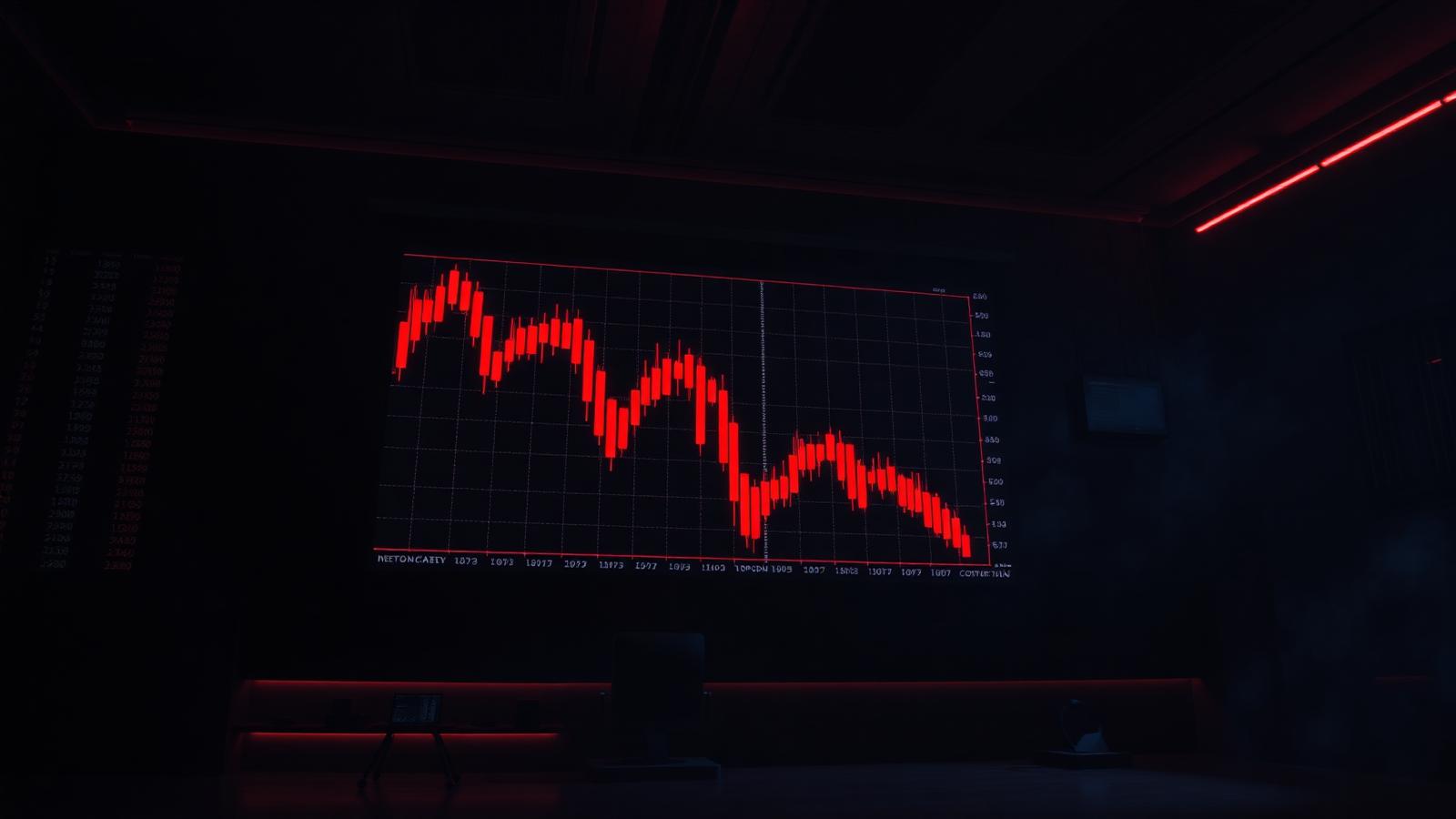
Friday was the kind of session traders remember. The S&P 500 spent most of the week pinned near the highs, comfortable, slow, and quiet. By the closing bell on June 5, that calm was gone. SPY broke its week-long shelf, sliced through the lower Keltner channel on the 15-minute, and closed near 734 after holding 758 for days.
It was not just stocks. Bitcoin gave back 16.5% on the week and traded down to roughly $61,294. Crypto miners, semis, space names, solar, nuclear, and Chinese tech all went red together. The only baskets that stayed bid were the defensive ones — healthcare, staples, financials, real estate.
When risk assets sell off together while defensives catch a bid, that is not a stock-specific story. That is a positioning story. Money is rotating, not just selling.
Here is what I am seeing and how I am thinking about next week.
The Tape: SPY Lost Its Shelf
For most of the week, SPY held a tight range around 756–758. Buyers showed up on every dip. Volume was light. The Keltner channels on the 15-minute were narrow and slightly rising. That is what a controlled grind looks like.
Friday broke that character. The morning session faded the VWAP. The afternoon accelerated. The 15-minute candles closed below the lower Keltner band — a level the tape had defended all week. By the close, SPY printed a low near 734, more than 20 points below where it spent the prior four sessions.
A breakdown through a multi-day shelf on rising volume is not a normal pullback. It is a change of regime, at least short term. The tape stopped accepting the highs and started rejecting them.
The Breadth: Everything High-Beta Flipped at Once
The most useful signal yesterday was not any single stock. It was the breadth.
On my rotation model, the live system bias flipped sharply negative across almost every cyclical and high-beta theme. Crypto/miners, space, quantum computing, meme/retail favorites, nuclear/uranium, AI/semis, broad technology, solar/clean energy, Chinese tech, consumer discretionary, and cybersecurity all printed sell signals. Most of them showed accelerating downside momentum, weak relative strength versus the market, and underperformance against SPY over five sessions.
At the same time, the defensives held up. Healthcare, financials, real estate, and consumer staples were the only baskets still flashing buy or early-buy signals, with positive momentum slopes and outperformance versus SPY.
That pattern is textbook risk-off rotation. Capital is not leaving the market — it is moving from offense to defense. When eleven of fifteen tracked baskets flip sell in a single session and the four staying green are the boring ones, that is positioning telling you the dominant trade for next week may not be the same one that worked all month.
The Crypto Tell: Bitcoin Confirmed It
If the equity selloff were purely an equity event, you would expect crypto to decouple. It did the opposite.
Bitcoin closed near $61,294, down 16.5% on the week from a high of $74,091. That is a serious drawdown for a major liquid asset in five trading days. Hash rate, fees, and difficulty all held steady — this was a price move, not a network event. Funding got punished. Leverage got cleared.
Crypto leads risk in both directions. When BTC sells off this hard while equities are still trying to hold a range, it is usually a warning. Yesterday, the equity tape finally caught down.
Watching crypto into next week matters. If BTC stabilizes around $60K and starts to base, equities likely get a bounce. If it loses $60K decisively, expect another leg lower in high-beta names — semis, miners, space, and anything else that trades like a long-duration risk asset.
Why It Probably Happened
There is rarely one clean reason for a session like Friday. But the setup was there.
Positioning had gotten one-sided. Long exposure to AI, semis, and momentum names was crowded heading into June. Implied volatility was compressed. The market had absorbed a string of bullish catalysts and stopped reacting to good news. That is the classic precondition for a flush.
Add the macro backdrop — sticky inflation prints, a Fed in no hurry to cut, and yields creeping back toward levels that pressure long-duration equities — and you have a tape primed for a deleveraging event. It does not take a big headline to trigger that. It just takes one large seller and a thin order book.
Once SPY lost the shelf, systematic strategies likely added to the move. CTAs flip exposure on price. Vol-targeting funds reduce gross when realized vol picks up. Dealers who were short gamma in calls on the way up flipped to selling futures on the way down. Mechanical flows compound directional moves, especially on a Friday.
What I Am Watching Next Week
The line in the sand is SPY 734. That is where Friday closed and roughly where the prior pivot sits. If buyers defend it Monday and the tape reclaims the 20-period Keltner mid, this likely becomes a one-day shakeout — painful, but not the start of something bigger. Bounces from oversold conditions into prior support are normal.
If 734 breaks on volume, the next real shelf is meaningfully lower. That is the scenario where the defensive leadership keeps working and where shorts on the broken high-beta groups have room to extend. Watch the QQQ/SPY ratio — when tech stops leading, broad indices have a harder time holding up.
On crypto, $60K BTC is the level that matters. Hold it, and risk gets a chance to rebuild. Lose it, and expect miners, MSTR, and adjacent equities to take another leg down.
On rotation, the question is whether defensives keep leading or whether the rotation reverses quickly. If healthcare, staples, and financials give back their relative strength on Monday, that tells you the selloff was a one-day flush. If they keep leading, the market is telling you to size down beta exposure until the picture clears.
How I Am Trading It
Smaller size. Tighter risk. Shorter timeframes.
After a session that breaks character, the worst thing a trader can do is keep running last week's playbook. The setups that worked when SPY was grinding to new highs — buying every dip, holding swing longs in semis, fading vol — are not the setups that work in a tape that just broke a shelf with bad breadth and a crypto confirmation.
I want to see how the market opens Monday before committing. If we get a gap down that holds and reverses, that is information. If we get a weak bounce on light volume that fails by midday, that is information too. The tape will tell you which regime you are in within the first hour or two.
Until then, the bias is defensive. Keep the watchlist tight. Respect the level. Do not be a hero in names that just gave you a clean sell signal.
Final Thought
One day does not make a trend. But one day can mark a turn. The combination of a clean SPY breakdown, broad sell signals across cyclicals, defensive leadership, and a deep crypto drawdown is the kind of signal cluster that deserves respect — not panic, but respect.
Markets reward people who notice when the character changes and adjust. They punish people who refuse to. Yesterday was a character change. Whether it lasts a day or a quarter is what next week will decide.
Until then, my job is simple. Watch the level. Watch the leaders. Watch the crypto tell. And size accordingly.
Disclaimer
This article reflects my personal opinion only and should not be relied upon as financial, investment, trading, legal, or tax advice. Do not trade or invest based on my views. I may or may not buy, sell, short, trade options on, hold, hedge, or otherwise have exposure to any of the markets, sectors, or instruments mentioned in this article. I may change my opinion, strategy, or positions at any time without notice.
Markets involve substantial risk, including the possible loss of capital. Any reader should do their own research and consult with a qualified financial adviser before making any trading or investment decision. Nothing here is a solicitation, recommendation, offer, guarantee, or promise of future performance.
This essay reflects the personal views and opinions of Guy Gentile and is published for informational and educational purposes only. It is not investment advice, a recommendation to buy or sell any security, an offer or solicitation, or a research report. Markets carry risk and any positions, setups, or names discussed may change without notice. Mr. Gentile and parties affiliated with him may hold, add to, reduce, or close positions in the securities discussed at any time. Do your own research and consult a licensed financial professional before making investment decisions. Past performance is not indicative of future results.
Premarket notes, trade setups, and op-eds — free, in your inbox. Read more →