Is Marc Cohodes Next? After the Andrew Left Verdict, the Loudest Short-Seller on the Tape Should Be Sweating
The Andrew Left conviction redrew the line between research and manipulation. Marc Cohodes built his entire brand on the other side of that line — bullhorn campaigns, regulator phone calls, and personal pressure on the people he is short. After the Left verdict, every one of those tactics is now legal exposure.
Andrew Left is a convicted felon. A federal jury said so. Wall Street is still digesting what that verdict actually means for everyone who publishes opinions about stocks for a living.
I wrote the companion piece to this one and laid out the free-speech problem. This piece is the other half of the question. If the line is now drawn where DOJ says it is drawn, who else is standing on the wrong side of it?
I have a candidate. His name is Marc Cohodes. And before anyone calls this a hit piece — yes, it is an opinion column, yes, I have personal history with him, and yes, I am happy to put my name on every word.
Full Disclosure Up Front
I am not pretending to be a neutral observer here. In August 2019 I sued Marc Cohodes for $25 million in Sonoma County, California, for defamation. The New York Post covered it at the time. Cohodes filed an anti-SLAPP motion. The reason any part of that motion went his way at the trial court was that the judge found I was a 'limited public figure,' which under California law raises the plaintiff's burden on an anti-SLAPP motion to the actual-malice standard. That is a ruling about my public profile and about which California procedural standard applies. It is not a ruling that anything Cohodes said about me was true.
Cohodes was not satisfied with the partial trial-court win. He took it up on appeal in Gentile v. Cohodes, A161721, trying to expand his anti-SLAPP victory so that he could collect his attorneys' fees from me. He hired a big law firm to do it. I represented myself. In October 2021 the California Court of Appeal rejected his attempt to expand the ruling — I won that appeal, pro se, against his law firm. He did not get the broader anti-SLAPP order he was asking for, and he did not get his fees.
The bottom line on the public record: the limited-public-figure finding at the trial court raised the bar I had to clear at that early procedural stage. It did not bless anything he said as true. And when he tried to turn that procedural ruling into a fee award against me on appeal, he lost — to me, representing myself.
I am telling you all of that on the first page because I want you to weigh everything that follows knowing exactly where I am coming from. I am not hiding the ball. I have a beef with this guy. I also have, in my opinion, the receipts.
Who Marc Cohodes Actually Is
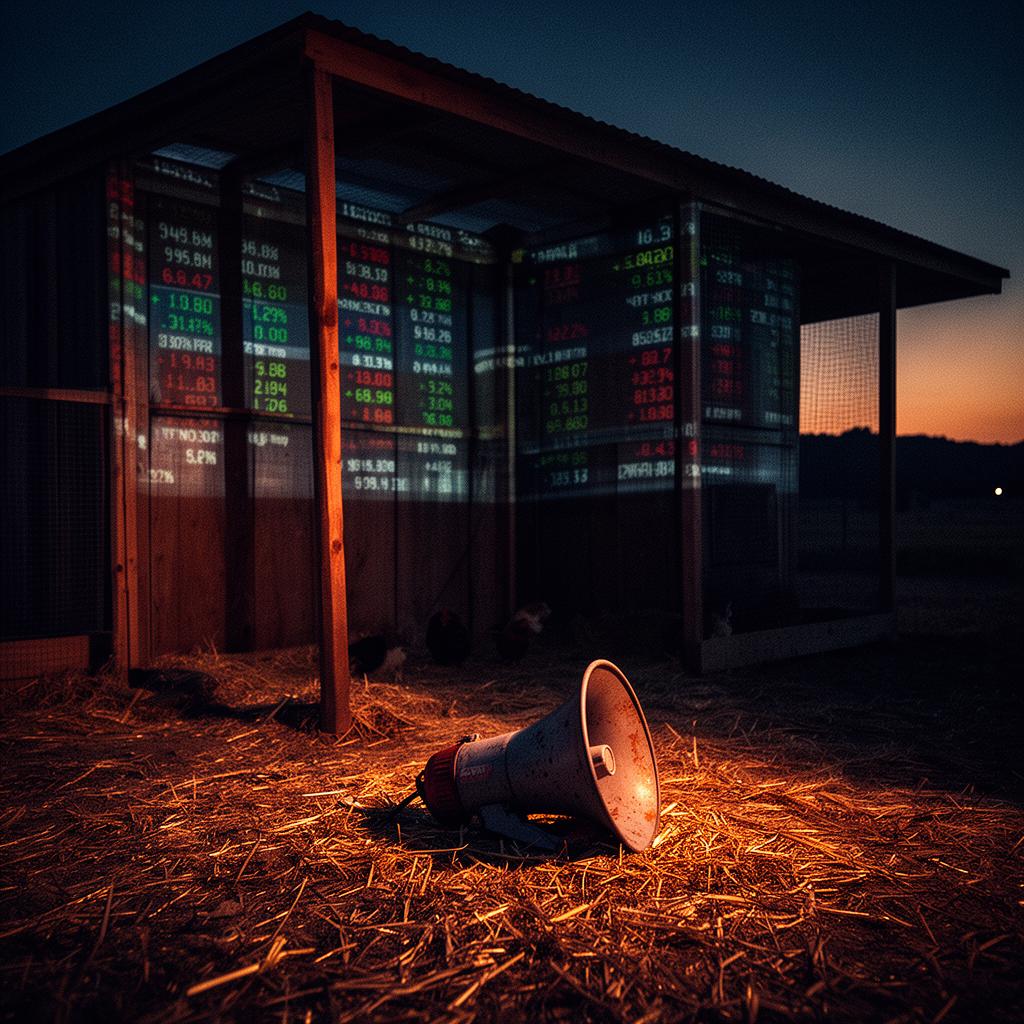
Marc Cohodes ran Copper River Partners, a short-only hedge fund that blew up in the 2008 crisis. Since then he has reinvented himself as a private short-seller, a Twitter personality, and the self-styled scourge of fraudsters everywhere from his chicken farm in Cotati, California.
He has been on the right side of some big calls. Home Capital Group in Canada. Valeant Pharmaceuticals. Wirecard, eventually. Those are real wins and he is entitled to take credit for them.
He has also been on the loud, wrong, or contested side of a long list of others — and the way he plays the game is the part of this story that matters now.
The Playbook Is Not Research. It Is a Pressure Campaign.
Read the Bloomberg coverage. Read the court filings. Read the regulators' rulings. A pattern shows up over and over again in matter after matter.
Step one: take a short position. Step two: publish a thesis on Twitter, in interviews, on podcasts, in slide decks. Step three — and this is the step that separates Cohodes from a normal short report writer — call the regulators. Call the FBI. Call short-seller-friendly reporters. Call the company's auditors. Call the company's bank. Call the executives' families. Cohodes himself has bragged on the record about doing several of these things.
Step four: keep talking, in extremely personal terms, about the targets. Not the financials. The people. By name. By family. By neighborhood. Bloomberg's August 2018 piece on the Badger Daylighting fight was literally titled 'Short-Seller Cohodes Resumes Badgering Badger After Ban Fails.' The verb is in the headline because the verb is the strategy.
That is not the activity Andrew Left was just convicted of. But it lives in the same neighborhood, and after the Left verdict, the neighborhood just got a lot worse to live in.
What Regulators Have Already Said About Him
The Alberta Securities Commission opened a proceeding against Cohodes over his Badger Daylighting campaign and tried to obtain an order preventing him from trading the stock or making misleading statements about it. In October 2018 an ASC panel denied the requested order — Cohodes won that one, on the merits the panel was asked to decide.
That is the cleanest 'win' he has against a regulator. It is also the only one. The fact that a securities regulator in another country brought a case at all, and that he had to spend serious money to beat it, tells you the kind of conduct that draws regulator attention to him. The ASC did not bring that case because Cohodes was running a quiet research shop.
Meanwhile in the United States, MiMedx — a company Cohodes attacked for years and that ultimately did settle real accounting issues with the SEC — also did its own dirt-digging on him. Cohodes sued MiMedx for defamation and wiretap claims and that fight produced its own public record of the tactics being used on both sides. The point is not that Cohodes was wrong about MiMedx's accounting. He was right about a lot of it. The point is that even when he was right on the thesis, the conduct around the thesis generated multiple lawsuits, multiple investigations, and multiple regulator inquiries.
And in 2020, he sued the Department of Justice itself to try to pry out FBI documents tied to the MiMedx investigation, after that investigation had reportedly examined him as well as the company. Short-sellers who are confident their own conduct will hold up under a microscope generally do not have to subpoena the FBI to find out what the FBI is saying about them.
Why the Andrew Left Theory Maps Onto Cohodes
Read my companion piece on the Left verdict for the legal frame. The short version: prosecutors did not convict Andrew Left for being bearish. They convicted him on a theory that his public statements about his position and his actual trading behavior did not line up, and that the people on the other side of his trades were therefore being deceived.
Now apply that exact lens to a Cohodes-style campaign. He tells the world a company is a zero. He calls regulators and reporters to amplify the call. He posts dozens of times a day on Twitter. Somewhere in that storm of public statements, what is his actual position? When did he cover? Did he ever flip? Did he add on green days and trim on red days while the public-facing message stayed scorched-earth bearish? Did the bullhorn intensity correlate with his book — or with his exit?
I do not know the answers. Neither do you. But under the Left theory, those are now the questions a federal prosecutor is allowed to ask, with a grand jury, with trading records, with broker DMs, with Telegram chats, with everything. The Left verdict made those questions chargeable. That is the new exposure for every activist short-seller in the United States, and Cohodes is the loudest, most public, most personally-aggressive practitioner of the activist short-selling playbook still operating at scale.
The Personal Conduct Question
There is a second, separate line of exposure that has nothing to do with securities law and everything to do with how he treats the people on the other side.
Cohodes has, for years, named executives, named family members, posted phone numbers, posted home neighborhoods, and incited his followers to pile on. That is not analysis. That is harassment, in my opinion. Companies, executives, brokers, journalists, and bystanders have all been on the receiving end of it. Some of them sued. Some of them settled. Some of them, including me, are still litigating in the court of public opinion.
None of that personal conduct is what DOJ went after Andrew Left for. But it is the kind of conduct that, in 2026, generates a long tail of civil exposure — defamation, intentional infliction of emotional distress, tortious interference — that compounds every time he wins a short and the target survives anyway. He has been sued. He has had to fight anti-SLAPP motions himself. He has lost some. He has won some. The litigation log is not the log of a quiet research analyst.
What I Actually Think Happens Next
I am not predicting an indictment. I am predicting attention. The Left verdict gave the Southern District of New York and every other US Attorney's office a freshly validated theory for prosecuting public-facing short campaigns. Career prosecutors do not develop a new theory and then sit on it. They look for the next case that fits it. They look for a defendant who is loud, who is visible, who has a long public record of statements to put up on a screen for a jury, and whose trading record can be subpoenaed and compared line-by-line with what he said in public.
If you were a federal prosecutor in 2026 looking for that defendant, who would be on the short list? Pick any honest answer and Marc Cohodes is on it.
He is not going to stop talking. That is the whole brand. Every tweet, every podcast, every interview from here forward is another data point a prosecutor can put on a timeline next to his trades. He is, in effect, hand-building the exhibit list against himself in real time.
A Note On The 'I Might Already Be Undercover' Bit
I will save the FBI a phone call. I am not running an operation against Marc Cohodes. I do not have to. The public record is doing the work for me, the Andrew Left verdict gave the public record a new meaning, and Cohodes himself supplies fresh material for the file every day he is online. The case against the bullhorn short-seller model, if one ever gets brought, will not need any help from me.
What I am doing is what he has done to a lot of people for a long time — publishing my honest, fully disclosed opinion, on a matter of public interest, with my name on it. He has spent years insisting that is a protected, healthy, even essential activity. I agree. So here it is.
Conclusion
The Andrew Left case was not the end of activist short selling. It was the rewriting of the rules. The people who keep playing the old game on the old rules are the ones who are going to get hurt.
Marc Cohodes built a career playing the loudest possible version of that old game. He has been right about real frauds. He has also, in my opinion, used tactics that crossed lines decent people do not cross and that prosecutors now have a framework to test in court. After June 2026, every one of those tactics carries a price tag it did not carry before.
Is he next? I do not know. I do know that if I were him, I would be calling a very good white-collar lawyer this week, not because of anything I have said here, but because of what twelve people in a federal courtroom said about Andrew Left.
The bullhorn era is ending. The only question is whether it ends with a settlement, a civil judgment, an indictment — or all three.
Disclosure And Disclaimer
Disclosure: I, Guy Gentile, sued Marc Cohodes for defamation in California in 2019 (Sonoma County Superior Court No. SCV265069). The trial court partially granted Cohodes's anti-SLAPP motion after finding I was a 'limited public figure,' which raised my burden on that motion to actual malice. Cohodes then appealed in Gentile v. Cohodes, A161721, seeking to expand the ruling so he could recover his attorneys' fees from me. Represented by a large law firm on his side and by myself, pro se, on mine, I won that appeal in October 2021 — the Court of Appeal did not give him the broader anti-SLAPP order or the fees he was asking for. I disagree with the trial-court limited-public-figure ruling and stand by the underlying claims, but the record is what it is. I have no current litigation pending against Mr. Cohodes as of the publication date of this piece. I have no position, long or short, in any security tied to any Cohodes campaign discussed above.
This article is an opinion column. Every characterization of motive, strategy, or future legal exposure is my personal opinion, based on the publicly reported materials linked in the citations. Nothing here is a statement of fact about any pending or contemplated criminal investigation. Nothing here is legal, financial, investment, or tax advice. I am not a lawyer and I am not your lawyer. Anyone facing a regulatory or criminal matter should consult experienced counsel about their specific situation.
This essay reflects the personal views and opinions of Guy Gentile and is published for informational and educational purposes only. It is not investment advice, a recommendation to buy or sell any security, an offer or solicitation, or a research report. Markets carry risk and any positions, setups, or names discussed may change without notice. Mr. Gentile and parties affiliated with him may hold, add to, reduce, or close positions in the securities discussed at any time. Do your own research and consult a licensed financial professional before making investment decisions. Past performance is not indicative of future results.
Premarket notes, trade setups, and op-eds — free, in your inbox. Read more →