Part III — The Yaniv Frantz Deposition: How the SEC's Sales-Manager Witness Was a Fired Employee Who, Under Oath, Defined Rule 15a-6 in Guy Gentile's Favor
A close reading of Yaniv Frantz's March 11, 2023 sworn deposition in SEC v. MintBroker/Gentile — the record in which the SEC's solicitation witness conceded he was hired as 'senior sales manager,' that his only prior deposition was his own COVID-related wrongful-termination suit against his last employer, that the rule Guy taught him was 'you can accept U.S. customers as long as you're not soliciting U.S. customers,' that he did not know what 'affiliates' meant when he found the program, and that his knowledge of the affiliate deals came from third- and fourth-hand hearsay from colleagues whose full names he could not recall.
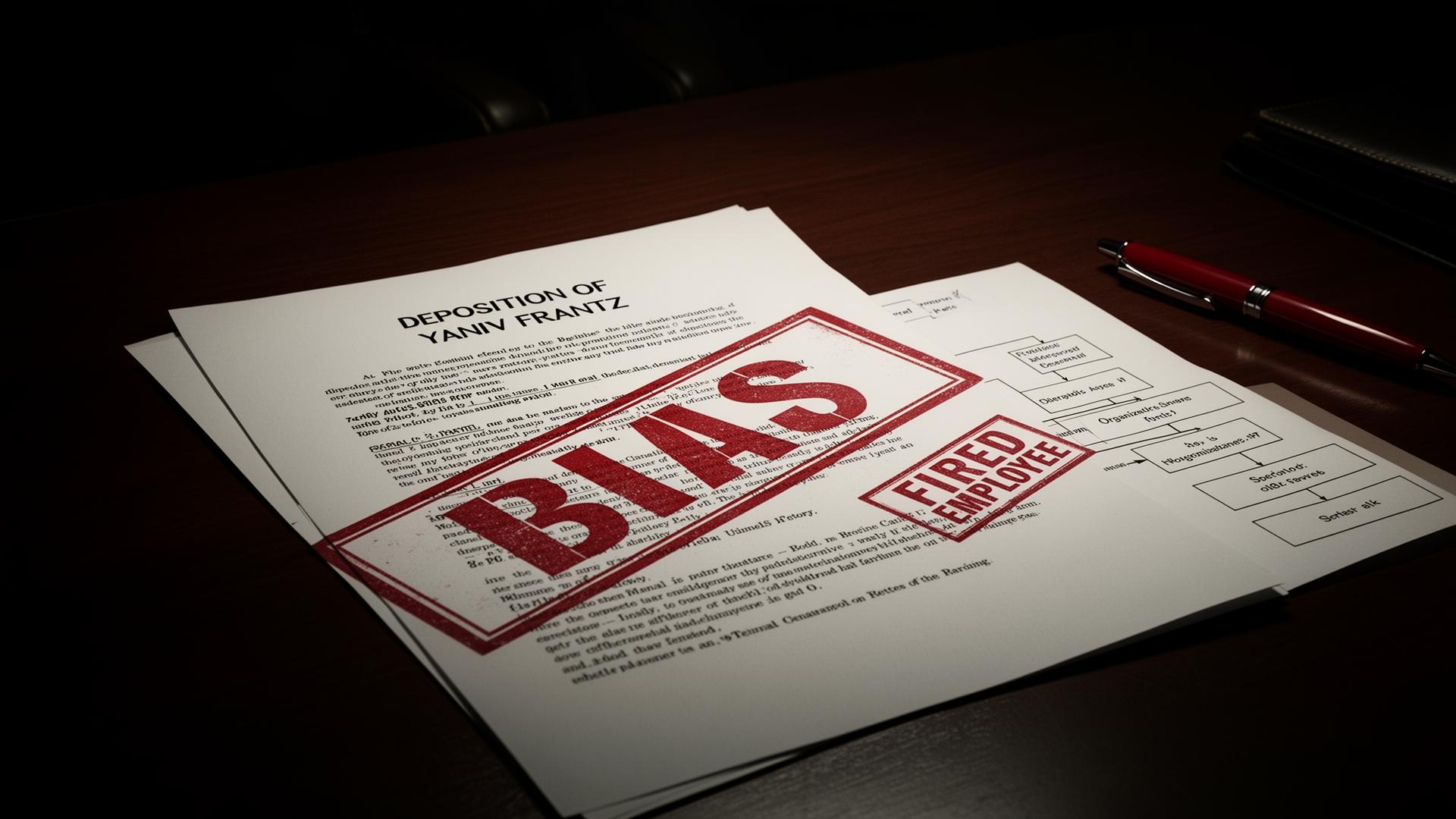
Part I of this series walked through the trial record. Part II walked through the sworn pre-trial deposition of my former chief compliance officer, Philip Dorsett. Part III is about the other former-employee witness the SEC put on at trial: Yaniv Frantz, who I hired in late 2016 as SureTrader's senior sales manager.
On March 11, 2023, Mr. Frantz sat for a videotaped deposition at 801 Brickell Avenue in Miami, beginning at 10:16 a.m. and ending at 4:12 p.m. The deposition was taken on behalf of the plaintiff — the SEC — by Alice K. Sum and Alise Johnson, with my counsel Matthew Ford of Ford O'Brien Landy LLP defending. The transcript runs over 130 pages.
What follows is a reading of that transcript. Under Federal Rule of Evidence 607, any party may attack a witness's credibility — including the party who called him. Under Federal Rule of Evidence 613, prior sworn statements are classic impeachment material. The Frantz deposition is full of both.
What This Article Is
This is the third piece in a series. Part I, at /articles/how-sec-rigged-suretrader-trial, covers the trial itself — the 1989-withdrawn Rule 15a-6 interpretive statement, the sixty-plus PDT mentions, and the May 21, 2024 Omnibus Order at Docket 264 that denied the SEC's summary judgment on all counts before the same elements were taken from the jury six weeks later. Part II, at /articles/sec-suretrader-trial-part-ii-dorsett-deposition-impeachment, walks through the Dorsett deposition page by page.
This piece is narrower. It is about one document: the certified transcript of the videotaped deposition of Yaniv Frantz dated March 11, 2023, in SEC v. MintBroker International, Ltd. and Guy Gentile, S.D. Fla. Case No. 21-cv-21079. Every quotation below is from that transcript. Page references follow the page numbers printed at the bottom of the certified Gradillas Court Reporters transcript.
I am not accusing Mr. Frantz of perjury. I am putting his sworn deposition next to the SEC's theory of the case and letting any reader see what the jury needed to see.
Why The Frantz Deposition Matters
At trial, the SEC told the jury that SureTrader ran a US sales and solicitation operation. The witness they used to tell that story was the man I hired to be SureTrader's senior sales manager. The SEC's solicitation witness was, by his own sworn admission, the head of the sales function at the firm whose sales practices were on trial.
That framing has a problem on day one. If the SEC's evidence that SureTrader solicited US persons is the testimony of the man who ran the sales department, then either the senior sales manager was running an illegal US sales operation that he is now describing as someone else's fault, or the sales department he ran was not in fact a US solicitation operation. The deposition is the place the SEC's own witness, under oath, picked the second answer.
And he had a reason to soften it. Before he ever met the SEC in this case, Mr. Frantz had been deposed once before in his life. The transcript records it on page 9.
Impeachment Point 1 — The Bias: His Only Prior Deposition Was His Own Wrongful-Termination Suit
Page 9. Alice Sum is qualifying the witness:
'Q. Have you ever been deposed before? A. I was. Q. Okay. And very briefly, what kind of matter was that? A. COVID-related wrongful termination.'
That is the SEC's solicitation witness, under oath, confirming that the only other time he has ever raised his right hand in a deposition was as the plaintiff in his own wrongful-termination case. The witness the SEC put in front of the jury as a neutral former employee describing what he saw at SureTrader is, on his own sworn record, someone who has previously sued an employer.
Federal Rule of Evidence 607 lets any party attack the credibility of any witness. Bias and motive are textbook 607/608 material. A jury weighing what weight to give a former-employee witness in a federal enforcement action is entitled to know that the same witness has a history of legal disputes with employers. The deposition gave the defense the foundation. Whether the trial cross drew it out cleanly is a question I leave to the appellate record.

Impeachment Point 2 — He Was The Senior Sales Manager
Pages 13–18. The SEC opened to the jury as if SureTrader's sales function were an unspoken, off-the-books operation. The deposition records the witness, under oath, describing it as the job he was hired to do.
Asked who assigned him his title, Mr. Frantz testified: 'My title, when I started… the senior sales manager. Q. Who assigned you that title? A. … The permit was with a title of a senior sales manager.'
Asked how he split his time when he arrived, he testified that 'we had the sales department over there,' and explained on page 18 that part of his job was 'managing the sales team.' He volunteered that 'I could say that I was managing pretty much employees from day one, just not officially by title.'
There is no surprise here. There is no hidden sales department. There is a senior sales manager openly running a sales team, with a work permit issued to that title, in a foreign jurisdiction. The legal question Count 1 actually turned on was whether that sales activity reached US persons in a way that lost the protection of Rule 15a-6 — not whether sales existed.
Putting the head of sales on the stand to prove the existence of sales proves nothing about the legal question. It proves the head of sales existed.
Impeachment Point 3 — His Own Sworn Definition Of The Rule Is The Defense Theory Of The Case
Pages 24–25. This is the answer that should have been read to the jury slowly, twice.
Mr. Frantz is describing what Guy taught him about US compliance. The SEC's lawyer is asking the questions. The witness's answer is on the record:
'… one thing that I know is that — from Guy is that as long as you're not reaching out to U.S. customers, you're not really soliciting U.S. customers, but you can accept U.S. customers.'
Read that sentence in light of Rule 15a-6. Rule 15a-6(a)(1) exempts a foreign broker-dealer that effects 'unsolicited' transactions with US persons. The entire defense at trial — and the entire reason Judge Bloom denied summary judgment on Count 1 in the May 21, 2024 Omnibus Order at Docket 264 — was that there was a genuine dispute over whether SureTrader's contacts with US persons were solicitations or unsolicited acceptances.
The SEC's senior-sales-manager witness, under oath, described the rule Guy taught him in the exact terms of the 15a-6(a)(1) exemption. Not 'we hid US activity from the regulator.' Not 'Guy told me to solicit US persons.' The opposite: Guy taught him that you do not solicit US persons, and that you can accept the ones who come to you on their own.
That is the SEC's witness, in a deposition the SEC took, confirming under oath that the firm's training was consistent with the statutory exemption the defense relied on. It is the second SEC-employee witness in two depositions — Dorsett in Part II, Frantz here — whose own sworn words describe the firm's posture as compliant with Rule 15a-6.
Impeachment Point 4 — He Did Not Know What 'Affiliates' Meant
Page 26. The SEC's affiliate-program theory was a central pillar at trial. The deposition contains the witness, on the record, conceding that he did not understand the program when he found it.
'… I found that there were affiliates that were coming from the United States that had deals made with SureTrader. Now, I didn't know at the time what it means, because as far as I know, we're not soliciting U.S. customers, and I don't know about what it means affiliates.'
Two things matter in that answer. First, the witness states that his working understanding of SureTrader's policy — the understanding he held while running the sales department — was that the firm 'is not soliciting U.S. customers.' That is, again, the defense theory and the language of Rule 15a-6. Second, the witness concedes that he did not know what the word 'affiliate' meant in the broker-dealer sense when he encountered the documents.
The SEC's solicitation witness, the head of sales at the firm, told the jury he had discovered a US solicitation program. His own sworn deposition says he encountered documents he did not understand and that, by his own description, conflicted with the policy he believed the firm was following.
Impeachment Point 5 — The Foundation Is Hearsay From People Whose Names He Cannot Recall
Pages 25–35. The deposition is candid about where Mr. Frantz's affiliate knowledge actually came from. It came from three sources: Michael (the trade-desk manager, last name not recalled — 'I don't recall his last name'), 'Drameko' (Michael's assistant, full name not recalled — 'I don't recall his full name'), and Justin Ritchie (in-house counsel).
On page 35, when the witness reaches the question of who actually negotiated the affiliate deals, the answer is: 'Wade.' Who is Wade? 'I never really had a face about who he is. He was like the mystery man, the ghost.'
Federal courts call this a foundation problem. The SEC's solicitation witness, under oath, is admitting that his knowledge of the alleged US-solicitation program rests on conversations with two colleagues whose full names he cannot remember and a 'mystery man' he cannot identify. That is not direct evidence. That is layered hearsay with the witness himself flagging that he never met the person at the center of it.
A jury weighing the SEC's solicitation theory was entitled to know the deposition foundation looked like this. The cross at trial is the place to check whether they did.
Impeachment Point 6 — 'Everything I Did Was With The Approval Of Guy Gentile'
Page 28. Asked who tasked him with looking at efficiencies and commission structures, Mr. Frantz answered: 'Again, I was put into different tasks, either by Guy or me trying to do something. But everything that I've done in the company was with the approval of Guy Gentile.'
On its face this answer reads like a gift to the SEC. In context it is the opposite. The witness positioning himself as a pure agent who did nothing without my approval is inconsistent with his trial posture as an independent fact witness describing things that happened around him. Either he was an independent professional running the sales department on his own judgment — in which case his testimony about my knowledge is hearsay about my mental state — or he was a pure agent who did nothing without my approval, in which case the SEC's witness is conceding that his every act, including the affiliate-email drafts they put in evidence, was directed and approved by me as the CEO managing the policy.
Both readings cut against the SEC's case. The first makes him a less reliable narrator of my intent. The second turns the affiliate-program documents into evidence of an actively managed compliance posture rather than a freelance evasion scheme.
Impeachment Point 7 — He Defined PDT Exactly The Way I Have Been Defining It For Fifteen Years
Page 29. The SEC's opening invoked the FINRA Pattern Day Trader rule dozens of times in front of the jury. The deposition contains the SEC's own witness defining PDT in the same terms I have used in every interview, every podcast, and every article on this site.
'PDT is a term for pattern day traders… Once you place more than four trade per week — three or four trades, I believe, you're considered a pattern day trader. Once you're considered as a pattern day trader with your brokerage or with the regulator, you must have $25,000 in the account to meet the requirements. SureTrader did not have that requirement.'
Two things to notice. First, even the SEC's witness describes PDT as a rule of 'your brokerage or… the regulator' — a FINRA member-firm margin rule under FINRA Rule 4210, not a federal statute and not part of any Rule 15a-6 obligation. Second, his explanation of why SureTrader was attractive to small US accounts — no $25,000 minimum, higher buying power — describes a regulatory-arbitrage product offering, not a securities-fraud scheme.
FINRA killed the PDT rule in 2026. That is not a defense to anything in the 2024 trial. But it is yet another data point that the rule the SEC used to color the jury's perception of the firm was a FINRA by-law that the regulator itself has now decided no longer makes sense.
Impeachment Point 8 — The Day 3 Stall Pattern
Part I of this series flagged that on Day 3 of the trial, on cross-examination by Matthew Ford, Mr. Frantz responded with some version of 'Can you repeat the question?' on more than eight separate occasions. Read that next to the deposition transcript, which is a smooth, narrative, almost discursive recitation of the same underlying events.
A witness who can deliver a five-page connected narrative under direct examination by SEC counsel in a deposition, and who then on cross at trial repeatedly asks the lawyer to repeat the question on the same topics he previously narrated freely, is exhibiting a pattern that a trial lawyer will recognize. The deposition record makes the contrast available. The Day 3 transcript is in the docket.
Part IV of this series, when it runs, will lay those two transcripts side by side.
What Should Have Happened At Trial
Federal Rule of Evidence 613 was written for exactly this kind of witness. A trial lawyer takes the prior sworn statement, confronts the witness with it on cross, gives the witness a chance to admit or deny, and — if the witness denies or evades — moves the prior statement into evidence as a prior inconsistent statement. Rule 607 lets the defense attack the credibility of an SEC witness even though the SEC called him. Bias, motive, prior litigation against employers, and prior inconsistent sworn descriptions of the legal rule the case turns on are all classic 607/613 territory.
When the witness on the stand is the SEC's senior-sales-manager witness, and his prior sworn statement defines the Rule 15a-6 exemption in exactly the terms the defense argued, concedes he did not know what 'affiliates' meant when he found the program, sources his knowledge to two colleagues whose full names he cannot recall and a 'mystery man,' and confirms his only prior deposition was his own wrongful-termination suit, the credibility ceiling on the SEC's solicitation theory should have been measurably lower than what the jury was allowed to see.
The Bigger Picture
The SEC's case against me on Count 1 required the jury to believe that SureTrader's US-person compliance program was a sham and that the senior people at the firm — the chief compliance officer and the senior sales manager — knew it was a sham. Part II showed that the deposition of the chief compliance officer pulled against that story. Part III shows the deposition of the senior sales manager pulled against it just as hard.
Two SEC witnesses. Two sworn pre-trial transcripts. Two witnesses describing the firm's posture in language that tracks the Rule 15a-6 framework the defense argued and that Judge Bloom found, in the May 21, 2024 Omnibus Order at Docket 264, raised a genuine dispute of material fact sufficient to deny summary judgment on all counts. Six weeks later the same elements were taken from the jury.
I am the defendant in this case. I am not neutral. I am also not making this up. Anyone with a PACER account can pull the Frantz deposition transcript and read the same pages I read. The Gradillas Court Reporters cover page, the appearances, and the page numbers cited in this article are how you find them.
I Lost On A Jury Form. I Won On The Record. The Record Includes This Deposition Too.
If you only read the verdict form, the SEC won. If you read the depositions the SEC took of its own witnesses — Dorsett in Part II and Frantz here — the case looks very different. All of these documents are public. All of them are sworn. None of them was put in front of the jury in full.
I will keep writing about this until the appellate process is finished, and after. The transcripts are not going anywhere. Neither am I.
Disclaimer
This article reflects my personal opinion based on the public deposition transcript and the public docket in SEC v. MintBroker International, Ltd. and Guy Gentile, S.D. Fla. Case No. 21-cv-21079. It is not legal advice, financial advice, investment advice, or a solicitation of any kind. Any quoted material is taken from the certified Gradillas Court Reporters transcript of the videotaped deposition of Yaniv Frantz dated March 11, 2023, and is reproduced for the purposes of comment, criticism, and reporting on a matter of public concern under the First Amendment.
If a reader believes any quotation has been mis-transcribed or taken out of context, the cure is to read the full deposition and the full trial transcript and to tell me where I have erred. Corrections will be made on the record.
This essay reflects the personal views and opinions of Guy Gentile and is published for informational and educational purposes only. It is not investment advice, a recommendation to buy or sell any security, an offer or solicitation, or a research report. Markets carry risk and any positions, setups, or names discussed may change without notice. Mr. Gentile and parties affiliated with him may hold, add to, reduce, or close positions in the securities discussed at any time. Do your own research and consult a licensed financial professional before making investment decisions. Past performance is not indicative of future results.
Premarket notes, trade setups, and op-eds — free, in your inbox. Read more →