Trade Review: The Weekend Setup Played Out — Now the Hard Part Starts
SPCX extended to $180 on day two. WTI cracked 5% to the 200-day on the US–Iran peace deal. The space sympathy basket already split into winners and roadkill. Here is what happened to Friday's setup, and what I am watching from here.
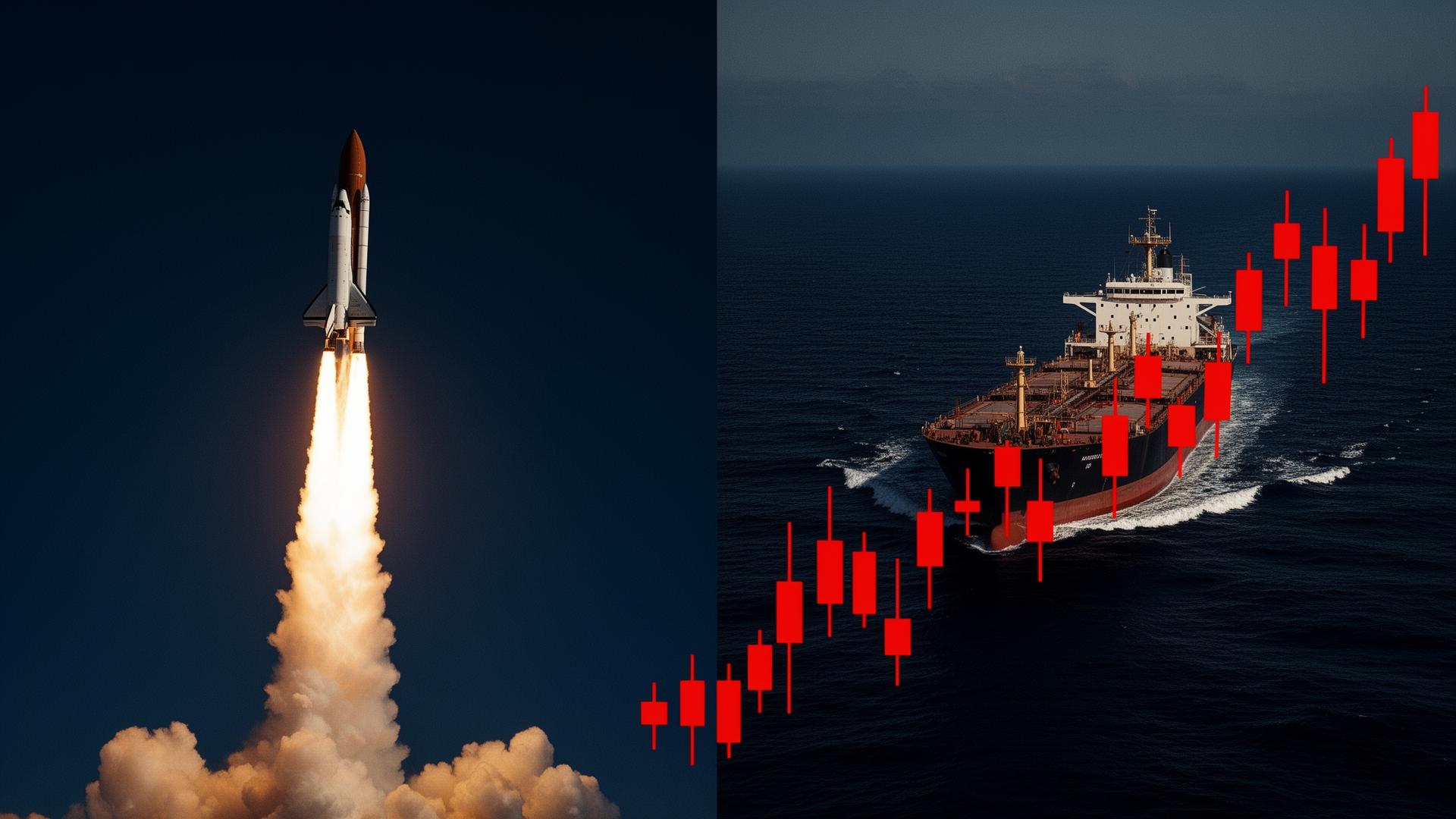
Friday I wrote the weekend re-priced two of the biggest trades on the tape. Monday told us how that re-pricing actually plays out in live size.
SPCX did not give the IPO pop back. It extended. Day two printed above $180, intraday the stock was up roughly 8%, and the implied market cap pushed against $2.28 trillion. Morningstar fired the first credible pushback shot — a fair-value call implying as much as 65% downside.
Crude did the opposite. The US and Iran moved from 'tentative accord' to a deal to reopen the Strait of Hormuz, WTI dropped almost 5% to roughly $80.73 — its first touch of the 200-day in over four months — and Brent slid toward $83. The S&P 500 opened up about 1.4% on the global risk-on.
And the space sympathy basket I laid out Friday already split. RKLB caught the upgrade and the Nasdaq-100 inclusion headline. ASTS, LUNR, RDW caught a sell note. Same basket, different tape.
SPCX Day Two: A FOMO Tape, Not a Sell-the-News Tape
The thing I was watching for after Friday's 19% close was whether day two could hold the print without a single distribution candle. It did better than that — it extended.
Intraday Monday SPCX was up roughly 8%, printed above $180, and tested a $2.28T cap. That is the under-allocated institutional bid I flagged Friday showing up in the open market. Funds that did not get filled on the deal are paying up for the float.
The first piece of resistance was not a chart level — it was Morningstar. Their fair-value implies as much as 65% downside from current prints. That is the first analyst note bracketing the price, and it is exactly the kind of marker that defines week two of a hot IPO.
Day two strength after a 19% day one is rare. Historically it points to index-inclusion demand and continued momentum dominance into the back half of the first week. The risk shifts to the second week, when lockup math, syndicate stabilization, and a wider analyst chorus start to anchor a range.
Hormuz Premium: Mostly Out, And That Changes the Crude Trade
The number that matters is not the percent. It is the level. WTI tagging the 200-day EMA at $80.73 — first touch in more than four months — is a regime line, not a tick.
On the way up, every dip in crude was bought because the Hormuz tail kept the floor higher than the fundamentals justified. On the way down, every rally has to fight the same tail leaking out the other way. Energy longs that were really Iran-premium hedges in disguise are now naked length.
From here oil trades supply and demand again, not headlines. OPEC's response into a sub-$80 print is the next read. If the cartel does not defend the level, $78 is in play, and the entire 'higher for longer crude' narrative gets stress-tested into FOMC week.
The Sympathy Basket Already Split
Friday I ranked the basket: RKLB and KTOS cleanest, LUNR and RDW thin-float beta, ASTS its own catalyst, PL the relative-strength survivor. Monday confirmed it faster than I expected.
RKLB jumped about 6.5% intraday on a KeyBanc Overweight upgrade and a set Nasdaq-100 inclusion date. That is the textbook quality-name response to a hot launch IPO — buyers wanted clean comps and went straight to the most institutional name in the cohort.
ASTS, LUNR and RDW underperformed on an analyst note that asked the harder question: can companies that depend on SpaceX for launch actually compete with SpaceX once it controls the cost of access to orbit? That is the long-term overhang and it just got written down in print.
Read together, the message is simple. SPCX going public does not lift every space ticker equally. It lifts the names with their own product story and pressures the ones whose business model assumes a neutral launch provider.
What I Got Right, What I Got Half-Right
Right: do not chase SPCX at the open, let the range set, then trade the break. The cleanest entries Monday were after the first thirty minutes, not into them.
Right: fade the war-bid in crude and pure-war defense on strength. WTI -5% and Brent toward $83 did the work.
Half-right: 'long the sympathy basket on pullbacks.' Correct on RKLB and KTOS. Wrong if you ran it as a basket — ASTS/LUNR/RDW underperformed and would have dragged a basket book.
The lesson is the one that keeps repeating in this market: rotation is happening inside themes, not just between them. You do not get to be long 'space.' You get to be long the right name in space.
What I Am Watching From Here
SPCX: the first real distribution day. A failed gap or a 5%+ red close on heavy volume tells you the under-allocated bid is exhausted and week-two mechanics are taking over. Until then, dips are still being bought.
Crude: $78–$80 on WTI. If the 200-day breaks and OPEC does not defend, the energy trade flips from 'buy the dip' to 'sell the rally' and the entire reflation read gets revisited. If the 200-day holds, oil quietly tells you the deal does not fully reopen Hormuz.
Space basket: does RKLB keep decoupling from the speculative names, or does the whole cohort re-converge into the SPCX print on a quiet tape? Convergence is the bull case for ASTS/LUNR/RDW. Decoupling is the bull case for being selective.
Macro: FOMC week framing. A risk-on tape with falling oil is the cleanest setup for a Fed that wants to sound patient without sounding hawkish. The CPI print and the dot plot decide whether this tape extends or gets sold into the meeting.
Bottom Line
The weekend setup played out almost exactly as written. SPCX extended. Crude cracked. The space basket bifurcated. The S&P opened up over a percent.
Now the hard part. Easy money in this setup was Monday's open. The next leg requires picking the right name inside the basket, respecting the first real red day in SPCX as a signal not a buying opportunity, and watching whether crude's 200-day holds or breaks.
Same playbook, tighter stops, smaller size into FOMC. The tape is giving you confirmation. It is not giving you permission to size up.
This essay reflects the personal views and opinions of Guy Gentile and is published for informational and educational purposes only. It is not investment advice, a recommendation to buy or sell any security, an offer or solicitation, or a research report. Markets carry risk and any positions, setups, or names discussed may change without notice. Mr. Gentile and parties affiliated with him may hold, add to, reduce, or close positions in the securities discussed at any time. Do your own research and consult a licensed financial professional before making investment decisions. Past performance is not indicative of future results.
Premarket notes, trade setups, and op-eds — free, in your inbox. Read more →